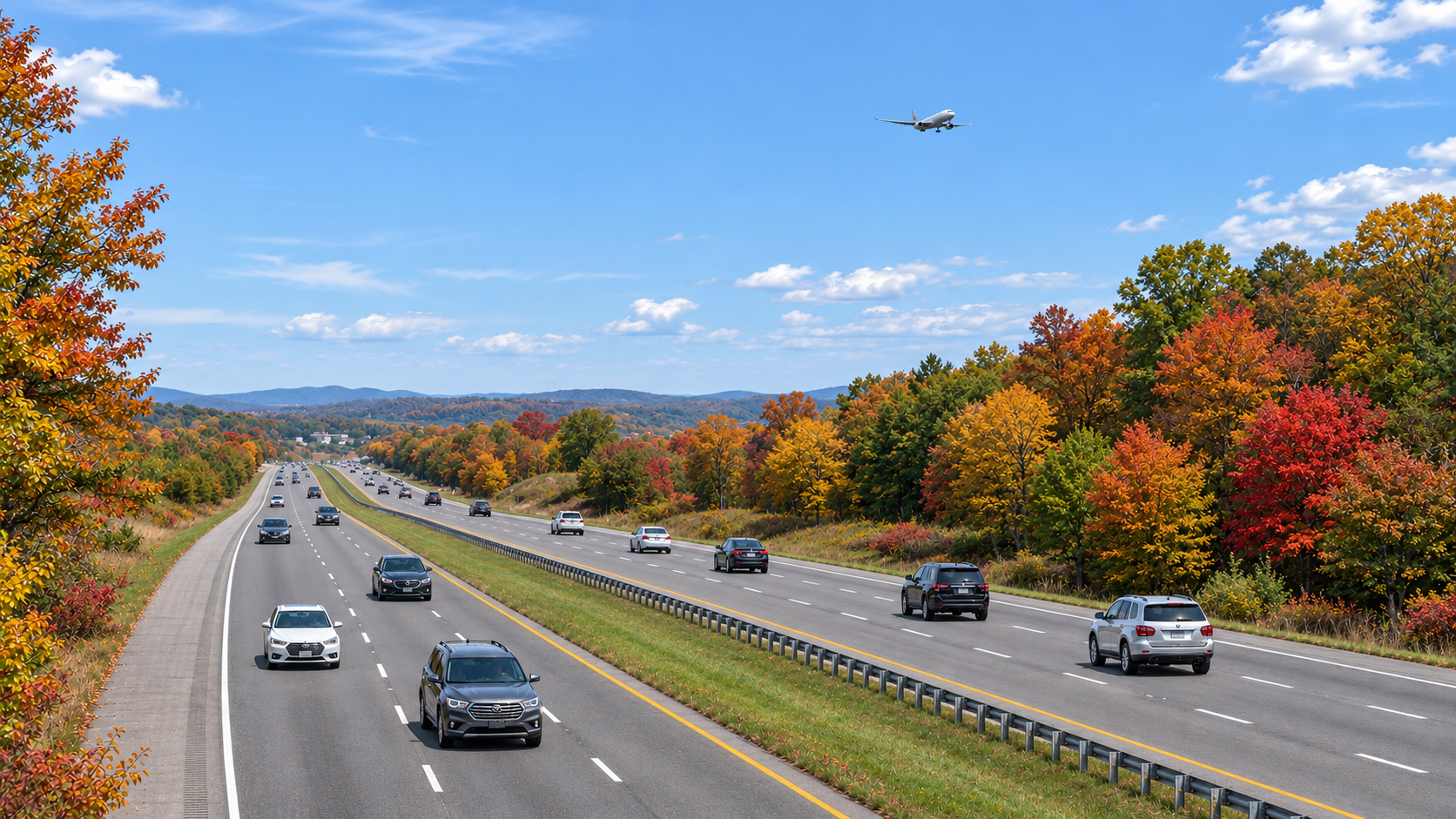
Thanksgiving travelers face the most expensive holiday trip in years, with round-trip domestic airfare up 17% and gas prices threatening to set a record.
AAA projected Monday, Nov. 16, that 81.5 million Americans will travel at least 50 miles from home between Tuesday, Nov. 24, and Monday, Nov. 30, according to its annual Thanksgiving travel forecast. That is about 121,000 fewer than last year's 81.6 million, a 0.1% decline that would end three consecutive years of record Thanksgiving travel.
The dip is small. Travelers will still feel the crush.
Stacey Barber, vice president of AAA Travel, said in a statement that higher travel costs are partly responsible for the slight decline but that projected volumes remain near record levels.
What the $800 airfare figure means
AAA data shows round-trip domestic flights booked through the organization for Thanksgiving are 17% more expensive than last year, averaging $800 per ticket. AAA spokesperson Aixa Diaz told Surround Sound News that the figure reflects a specific slice of the market.
"$800 is the average total price our members paid when booking their Thanksgiving plans through us," Diaz said. "Most people who book through AAA Travel are going on trips to desirable, in-demand destinations, and those tend to be more expensive."
AAA projects 5.96 million travelers will fly domestically for the holiday, a 0.2% decrease from last year.
Saving on Thanksgiving flights
For travelers looking to cut costs, Diaz offered Thanksgiving-specific advice.
"For Thanksgiving travelers looking to save, booking Thursday-Saturday flights is a good option," Diaz told Surround Sound News. "Flexibility is a traveler's best friend, so if you can fly out on Monday and stay until the following Tuesday, even better. Those days won't be as busy or expensive."
Diaz added that travelers without fixed plans should consider the week after Thanksgiving. "Travelers who are just looking for deals and don't have a preference on timing, the week after Thanksgiving is a great one to travel because it's post-Thanksgiving but pre year-end holidays," she said.
Separately, AAA's general booking tips recommend flying on Tuesdays and Wednesdays, which tend to be cheaper than weekend flights year-round. The organization also suggests checking secondary airports and packing your own food to save money.
Gas prices and the road ahead
AAA projects 72.9 million people will drive, down from 73.1 million last year. The national average for regular gas was $3.82 per gallon as of Nov. 16, compared with $3.08 a year earlier, the AP reported. If prices hold, gasoline would be more expensive on Thanksgiving Day than any previous year. AAA's prior Thanksgiving Day record was $3.58 in 2022.
In New Mexico, drivers are seeing a different picture. AAA New Mexico said in a media release carried by YourNewsNM that state pump prices have dropped significantly and should approach what drivers paid over the July Fourth travel period. Last year, New Mexico's statewide average was $2.76 on Thanksgiving Day.
Galen Grillo, vice president and general manager of AAA New Mexico, said in the release that 6.4 million Mountain Region residents are expected to travel for the holiday, slightly more than last year.
When to hit the road
Transportation data firm INRIX, as published by AAA, expects the busiest driving days to be Tuesday, Nov. 24, and Wednesday, Nov. 25, for departures, and Sunday, Nov. 29, and Monday, Nov. 30, for returns. The worst congestion falls in the afternoon and early evening. Morning departures offer the best chance to avoid heavy traffic.
Here is the day-by-day breakdown:
- Tuesday, Nov. 24: Worst traffic 2 p.m. to 8 p.m. Best time: before 1 p.m.
- Wednesday, Nov. 25: Worst traffic noon to 7 p.m. Best time: before noon.
- Thursday, Nov. 26: Minimal traffic expected.
- Friday, Nov. 27: Worst traffic 1 p.m. to 7 p.m. Best time: before noon.
- Saturday, Nov. 28: Worst traffic noon to 9 p.m. Best time: before 11 a.m.
- Sunday, Nov. 29: Worst traffic noon to 8 p.m. Best time: before 11 a.m.
- Monday, Nov. 30: Worst traffic 2 p.m. to 7 p.m. Best time: before 1 p.m.
Diaz noted that AAA's forecast includes metro-specific congestion data for major cities. "We have data for these major metro areas in the release, and we include the expected increase over regular traffic," she said. No Las Cruces, Albuquerque or El Paso metro area appears in the INRIX table. The closest I-25 corridor entry is Pueblo to Denver, where INRIX projects peak congestion at 5:30 p.m. Mountain time on Tuesday, Nov. 24, with an estimated travel time of 3 hours and 7 minutes, a 63% increase over typical conditions.
AAA also reminds drivers to check tires, batteries and fluids before leaving. Last Thanksgiving, the organization responded to more than half a million roadside emergency calls.